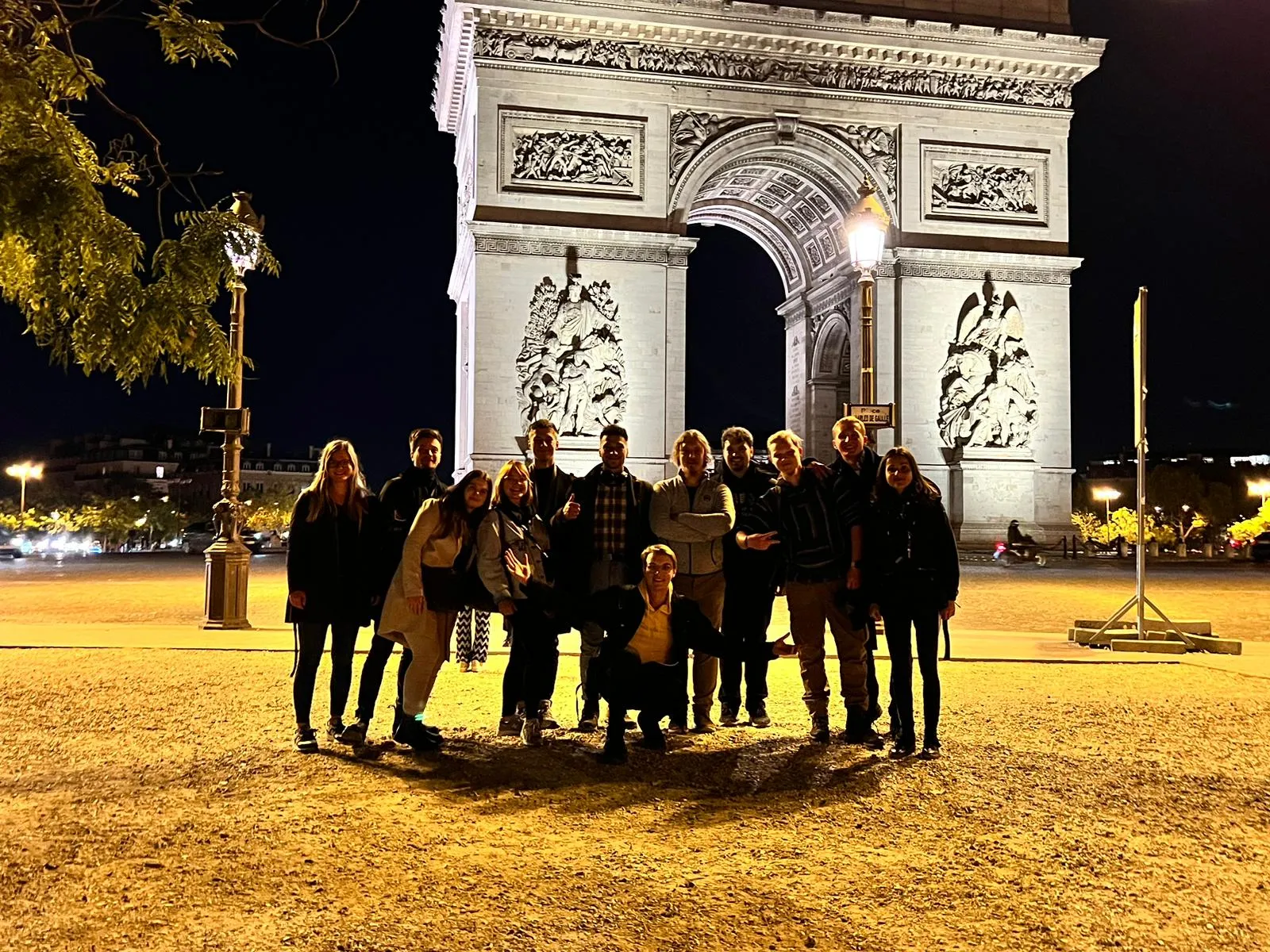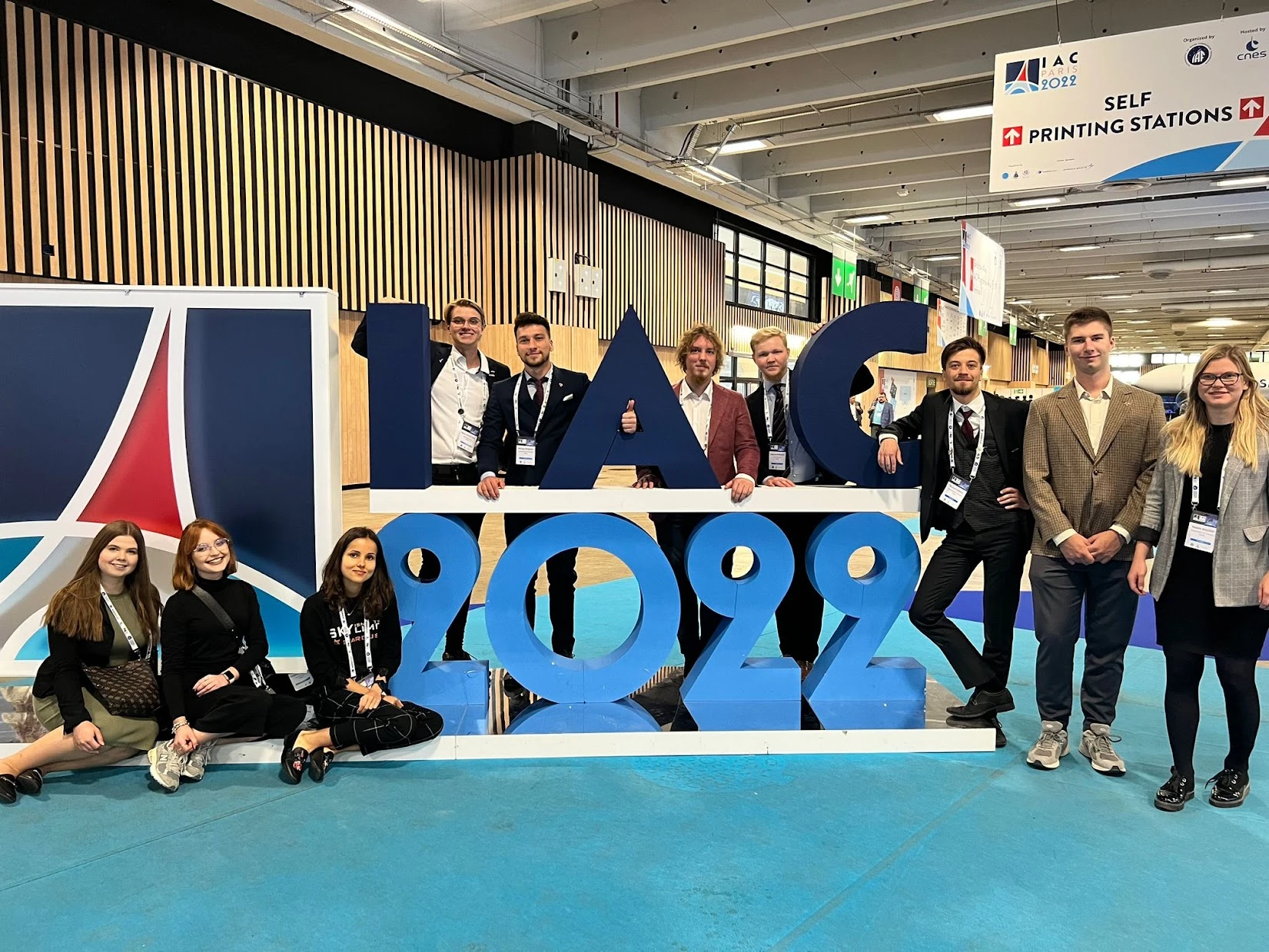
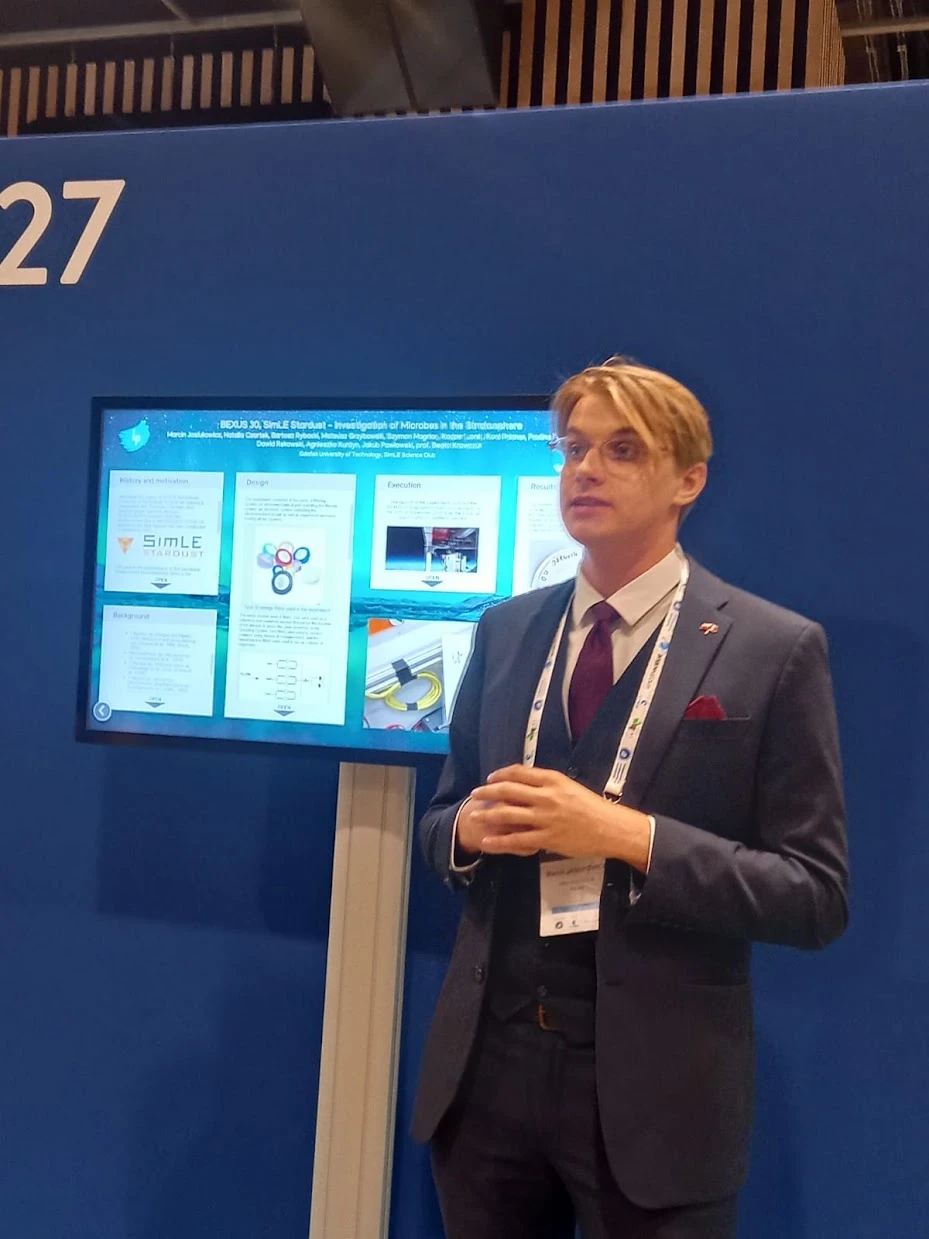
At the end of my Dubai post I asked if I would see you in Paris. I made it, and this time not only as a visitor. Our Stardust paper got into the late-breaking abstracts session of the Space Life Sciences Symposium at the 73rd International Astronautical Congress, so I could present the BEXUS 30 results to the IAC audience.
If you missed the earlier posts: Stardust catches microorganisms in the stratosphere. We flew on the BEXUS 30 balloon from Esrange Space Center in Sweden on 30 September 2021. Above 15 km the valves opened and the pumps filtered stratospheric air for 244 minutes, about 3500 litres of it. The gondola landed at 12:29, a helicopter brought our box back, and the scientific team had the samples just 4 hours after landing.
The honest summary is that this is hard science. The stratosphere has very few microorganisms, so you work with tiny amounts of material, and the risk of contamination is high. What we showed is that contamination can be controlled, and that modern biotechnology can work with such small amounts. We combined classical microbiology, growing cultures on agar, with MALDI-TOF mass spectrometry and DNA sequencing.
Two results I was happy to talk about:
- Up to 9 of the strains might be new species or strains. We don't know yet which ones came from the stratosphere and which from the ground air in northern Sweden, where our reference experiment ran. The DNA sequencing, which is still pending, will tell us.
- One of the microorganisms produces a blue dye, and within a certain range, the colder it is, the more dye it makes. We are still studying it.
What I value most about BEXUS is that it let a group of students focus on the science. The campaign and the launch were run by professionals from SSC and DLR, and experts from DLR, SSC, ZARM and ESA helped us through the whole project. We could put our energy into the payload.
The research was funded by the "Plutonium" grant of Gdańsk University of Technology, the Students' Council of Gdańsk Tech and the "Best of the Best 4.0" grant of the Polish Ministry of Science and Higher Education. Thank you!
The analysis of the samples continues, and we hope to fly more missions.
Read the full paper: BEXUS 30, SimLE Stardust - Investigation of Microbes in the Stratosphere (PDF).